
Tire rotation is one of the simplest ways to get the full life out of a set of tires, and one of the easiest services to forget. So, how often should you rotate your tires? Here’s the interval most cars need, the rotation pattern that fits your drivetrain, and how rotation differs from balancing and alignment.
The short answer: most cars should have their tires rotated every 5,000 to 8,000 miles, or about every 6 months, and sooner if you notice uneven wear. Performance cars, AWD vehicles and light trucks often need it closer to every 5,000 miles. Your owner’s manual has the final word for your vehicle.
- How often should you rotate your tires?
- Why do tires need to be rotated?
- What is the right tire rotation pattern?
- Rotation vs. balancing vs. alignment
- What happens if you never rotate your tires?
- Should you rotate at every oil change?
- How to keep your tires lasting longer
- Tire rotation in Irwindale
- Frequently asked questions
How Often Should You Rotate Your Tires?
Both NHTSA and Bridgestone put the typical rotation interval at every 5,000 to 8,000 miles, and Bridgestone adds “or every 6 months” for drivers who don’t rack up miles quickly. NHTSA also says to rotate sooner if you see uneven wear. The right number shifts a little by vehicle type.
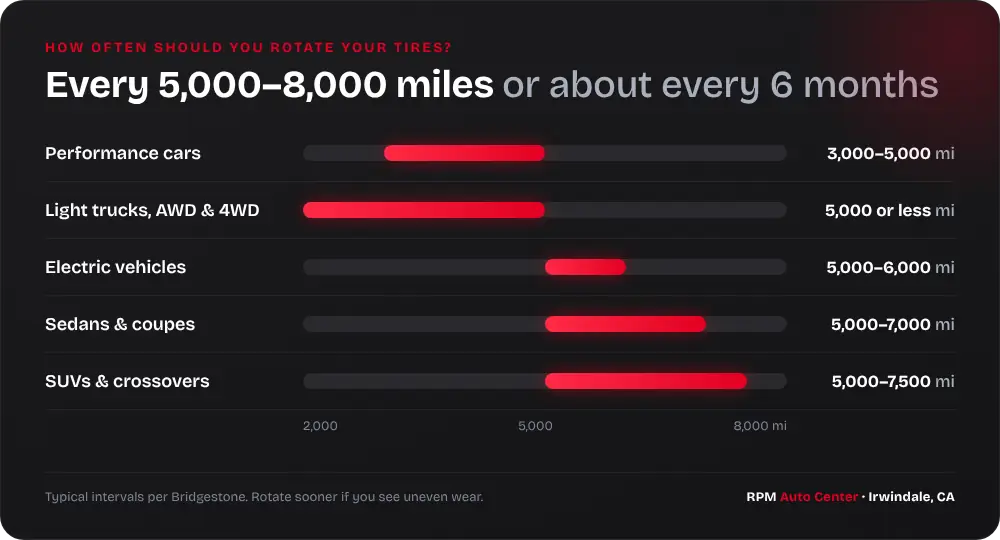
How often to rotate tires by vehicle type, per Bridgestone. Your manufacturer’s schedule comes first.
Some vehicles will even tell you when it’s time. Hondas with the Maintenance Minder, for example, show a rotation reminder right on the dash.
Why Do Tires Need to Be Rotated?
Tires don’t wear evenly on their own. The front tires do the steering, and on front-wheel-drive cars they also put the power down, so they often wear at a different rate than the rears. Rotating moves each tire to a new position so the wear spreads out.
Longer tread life
Bridgestone: rotation means “wear is spread evenly across all four tires, and their tread life is maximized.”
Steady handling
Even tread depth front to back keeps traction and handling predictable, especially in the rain.
Easier on AWD
On all-wheel-drive vehicles, Bridgestone notes “evenly worn tires lower the stresses on the drivetrain.”
Commuting in the San Gabriel Valley adds up fast. Stop-and-go traffic on the 210 and 605, plus plenty of tight turns in parking lots, puts steady work on your front tires. If your inspection shows the fronts wearing ahead of the rears, that’s your cue to rotate your tires sooner rather than later.
What Is the Right Tire Rotation Pattern?
The pattern depends on which wheels drive the car and what kind of tires you run. These are the four tire rotation patterns Bridgestone recommends:
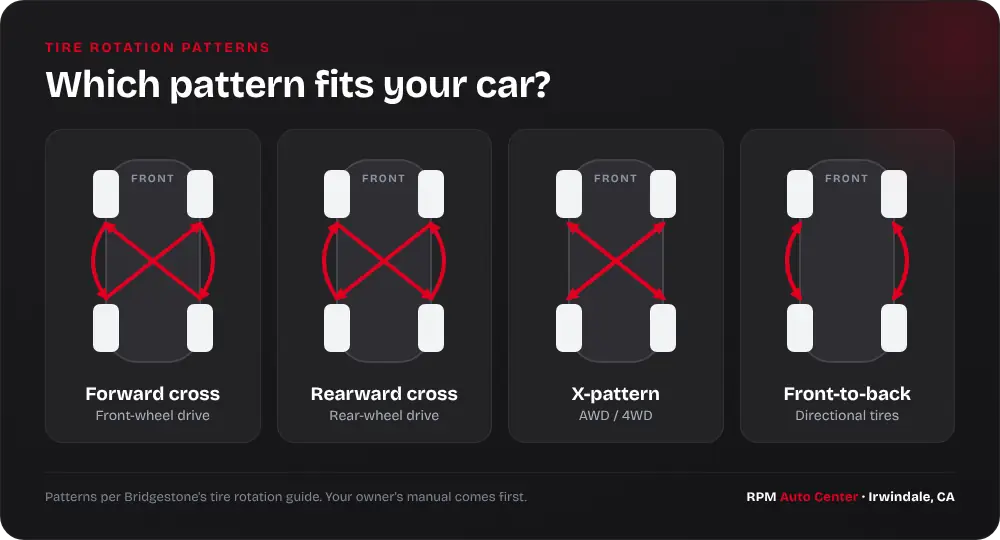
Front-wheel drive uses a forward cross, rear-wheel drive a rearward cross, AWD an X-pattern, and directional tires go front-to-back.
Forward cross
Front-wheel drive. The front tires move straight back. The rears cross to the opposite front position.
Rearward cross
Rear-wheel drive. The rear tires move straight forward. The fronts cross to the opposite rear position.
X-pattern
AWD and 4WD. All four tires move diagonally to the opposite axle, so each one visits every corner.
Front-to-back
Directional tires. Built to roll one way, they stay on the same side and swap front to rear.
If your car runs different-size tires front and rear, they can’t swap between axles, so ask your technician what’s possible for your setup.
Tire Rotation vs. Balancing vs. Alignment: What’s the Difference?
These three services all involve your tires and wheels, but they fix different problems. Rotation evens out wear, balancing stops vibration, and alignment stops pulling and keeps tires from wearing on one edge.
Rotation
Evens out tread wear
Sign: front and rear tread depths look different.
When: every 5,000–8,000 miles or about 6 months.
Balancing
Stops shakes and vibration
Sign: vibration, often in the steering wheel at highway speed.
When: with every new tire, and when a vibration shows up.
Alignment
Stops pulling and edge wear
Sign: the car drifts left or right on a straight, level road.
When: when the car pulls or wears one edge, and after suspension work.
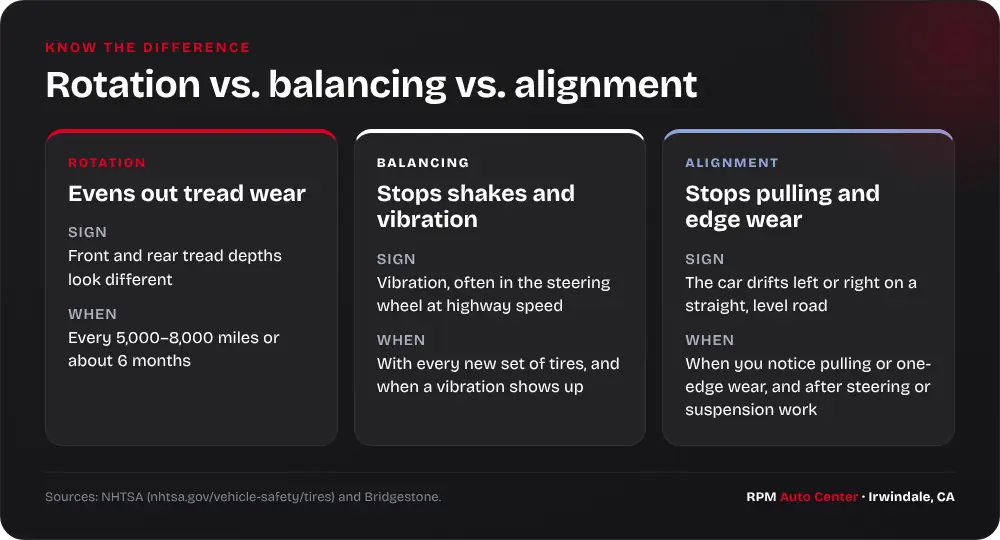
Tire rotation, balancing and alignment each fix a different problem.
“A wheel alignment maximizes the life of your tires and prevents your car from veering to the right or left when driving on a straight, level road.” — NHTSA
NHTSA also explains that balancing “ensures your wheels rotate properly and don’t cause the vehicle to shake or vibrate,” and that “new tires should always be balanced when installed.” Rotation won’t fix a car that pulls, and an alignment won’t fix a vibration caused by an out-of-balance wheel. If you’re noticing one of those symptoms, mention it when you book. See our wheel alignment service for more on pulling and edge wear.
What Happens If You Never Rotate Your Tires?
Skipping rotations doesn’t cause an immediate problem, which is why it’s easy to put off. The cost shows up later: the tires that do the most work wear out first, so you end up replacing a pair early instead of getting the full life out of all four. Watch for these signs:
Uneven front vs. rear
The front tires look noticeably more worn than the rears, or the other way around.
One-edge wear
One edge of a tire is wearing faster than the rest of the tread.
New vibration
A vibration you didn’t used to feel at highway speed.
Drifting
The car drifts to one side when you let go of the wheel on a straight, level road.
2/32″
Minimum safe tread depth
NHTSA says tires “are not safe and should be replaced when the tread is worn down to 2/32 of an inch.”
Quick penny test: put a penny into the tread with Lincoln’s head upside down. If you can see the top of his head, it’s time for new tires.
Should You Rotate Your Tires at Every Oil Change?
Not necessarily. Rotation and oil changes run on separate schedules, and at RPM Auto Center they’re separate services. Depending on your vehicle and the oil it uses, your oil change interval may be shorter or longer than your rotation interval. Our guide on how often you should change your oil walks through that side.
That said, the intervals often land close together, so plenty of drivers take care of both in one visit. If your tire rotation is due, just ask us to add it when you come in for an oil change in Irwindale.
Synthetic oil change. Tire rotation is priced separately; ask us to add it to the same visit.
How to Keep Your Tires Lasting Longer Between Rotations
Tire rotation does the most good when the rest of your tire care is on track too. A few simple habits help between visits:
Check pressure monthly
Check all four tires monthly when cold, per NHTSA. Use the pressure on your door label.
Balance new tires
Every new tire should be balanced when it’s installed, and again if a new vibration shows up.
Fix pulling early
A car that drifts often wears one edge of its tires. An alignment check saves the tread.
Get a free look
Our free vehicle inspection includes a tire check to see if your tires wear evenly.
Tire Rotation and Tire Service in Irwindale
RPM Auto Center has served San Gabriel Valley drivers from Irwindale since 2009, including customers from Monrovia, Arcadia, Duarte, Azusa and Baldwin Park. Our ASE-certified technicians handle tire service, rotations, balancing and wheel alignments on domestic, Asian and European vehicles. Repairs are backed by our 36-month/36,000-mile warranty. Not sure what your tires need? Start with our free vehicle inspection.
Keep reading
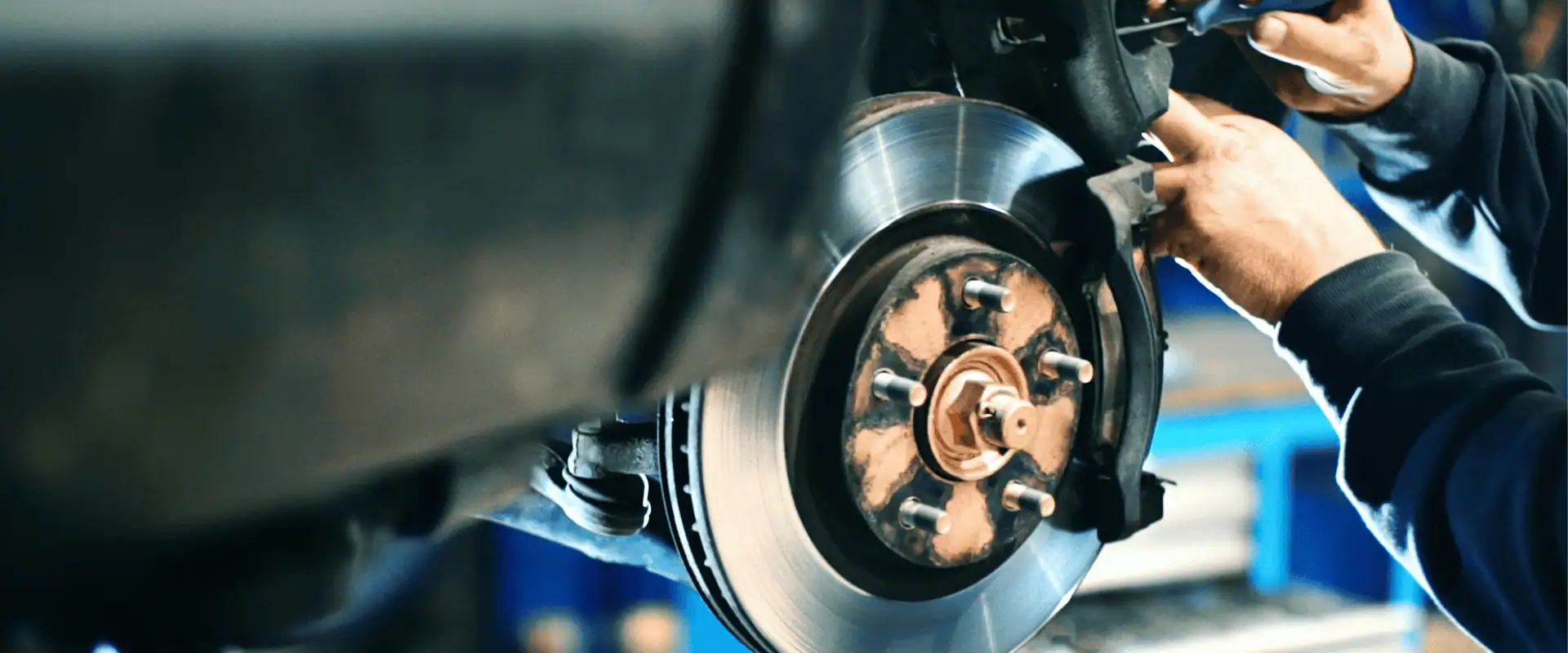
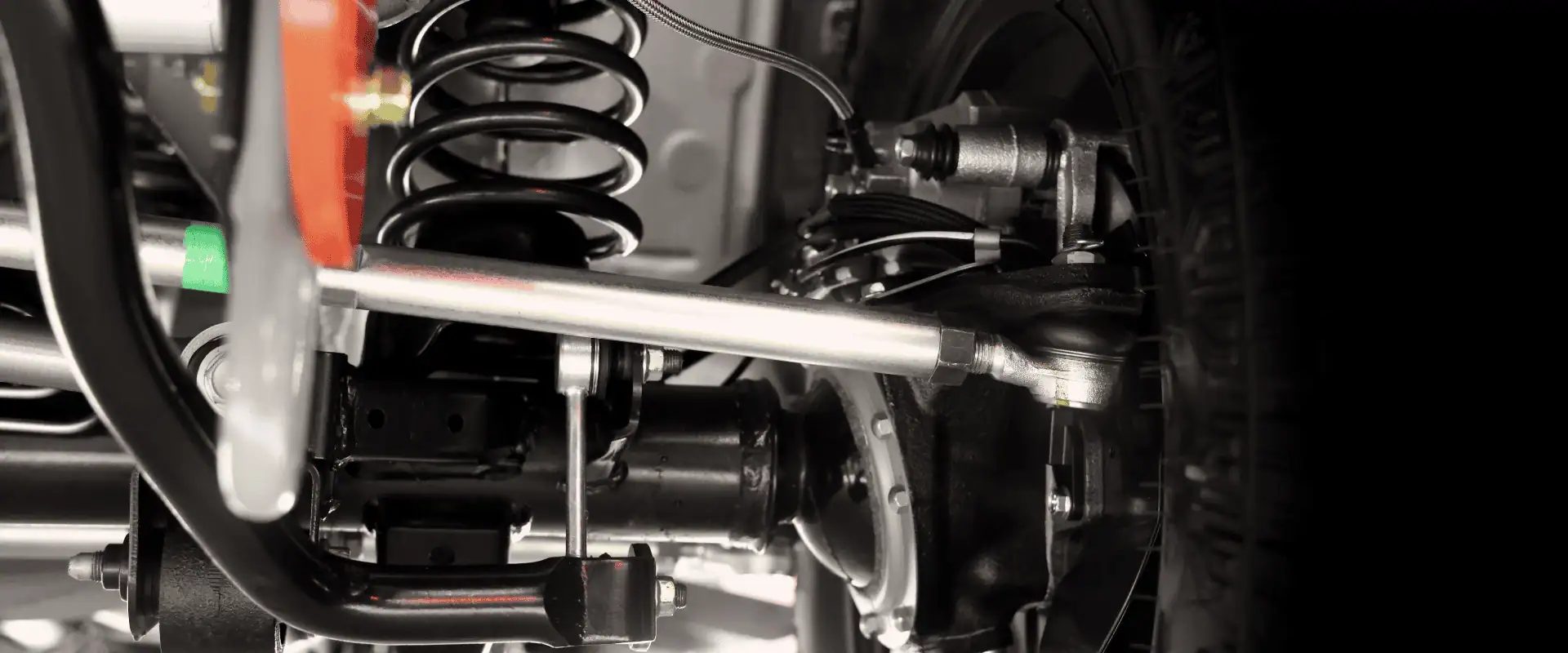
Feeling a vibration or shake? These guides can help you narrow it down before your visit.
Frequently Asked Questions
How often should you rotate your tires?
Most cars need a tire rotation every 5,000 to 8,000 miles, or about every 6 months. Performance cars, AWD and 4WD vehicles, and light trucks often need it closer to every 5,000 miles. Always check your owner’s manual for your vehicle’s schedule.
Is it OK to rotate tires every 10,000 miles?
It’s longer than the 5,000–8,000 mile range NHTSA and Bridgestone recommend for most vehicles. If your owner’s manual gives a different interval for your model, follow the manual. If you see uneven wear before your next scheduled rotation, rotate sooner.
What is the difference between tire rotation and wheel alignment?
A rotation moves your tires to different positions so they wear evenly. An alignment adjusts your wheel angles so the car tracks straight and the tires don’t wear on one edge. A car that pulls to one side needs an alignment check, not a rotation.
Do tires need to be balanced when they are rotated?
Not every time. Balancing is required when new tires are installed and is worth doing whenever you feel a new vibration, often in the steering wheel at highway speed. If you notice a vibration, mention it when you book your rotation.
Does RPM Auto Center include a tire rotation with an oil change?
No. Tire rotation is a separate service at RPM Auto Center. Many customers add a rotation to their oil change visit when both are due, and our current synthetic oil change special is $54.97. See our specials page for current offers.
