
If your car shakes when braking, you are not imagining it, and you should not ignore it. A shaking steering wheel or a pulsing brake pedal is one of the clearest warning signs your vehicle gives you, and in the San Gabriel Valley’s stop-and-go traffic on the 605 and 210, it is a symptom you will notice almost every single day. Below, the RPM Auto Center team breaks down the seven most common reasons a car shakes when braking, how to tell which one applies to you, and when it is time to get it inspected.
What Causes a Car to Shake When Braking?
In most cases, a car shakes when braking because of an issue with the brake rotors, pads, or a related suspension component. When a car shakes when braking, the root cause is almost always mechanical rather than electrical, which is good news, because it usually means a straightforward repair. Here are the seven causes we see most often at our Irwindale shop.
1. Warped or Worn Brake Rotors
This is by far the most common reason a car shakes when braking. Every time you brake, the pads clamp onto the rotors and convert your car’s momentum into heat. Repeated heavy braking, such as riding the brakes down the 210 grade, can cause the rotors to heat unevenly and warp slightly out of round. Once that happens, the pads grip a high spot on every rotation, which is what you feel as a rhythmic shake or pulsation, usually strongest in the steering wheel if the front rotors are affected.
2. Worn or Unevenly Worn Brake Pads
Pads that are worn down unevenly, glazed from overheating, or contaminated with grease can grab inconsistently. This is another frequent reason a car shakes when braking, and it is often mistaken for a rotor problem since the symptoms feel nearly identical from the driver’s seat.
3. A Stuck Brake Caliper
A caliper that is not releasing fully will keep one pad in constant contact with the rotor, generating extra heat and accelerating warping on just that corner. This often shows up as a pull to one side in addition to the shake, and it is a common, correctable reason a car shakes when braking on only one wheel.
4. Loose or Improperly Torqued Lug Nuts
It sounds simple, but lug nuts that loosened after a recent tire rotation or wheel service can cause a wobble that feels exactly like a brake shake, especially at highway speed. This is a quick, and sometimes free, fix to rule out first.
5. Wheel Bearing Wear
A worn wheel bearing can introduce play and vibration that gets worse under the added load of braking. If the shake is paired with a humming or grinding noise that changes with your speed, read our guide on wheel bearing noise and what replacement costs to compare symptoms side by side.
6. Suspension or Steering Component Wear
Worn control arm bushings, tie rod ends, or CV joints can all translate into a shake under braking, particularly when combined with uneven road surfaces common on older SGV streets.
7. Tire or Wheel Damage
An out-of-round tire, a bent wheel, or a tread separation can produce a vibration that becomes more noticeable as weight shifts forward during braking, even if the tire seems fine at a steady cruising speed.
Front Wheels or Rear Wheels: Where Is the Shake Coming From?
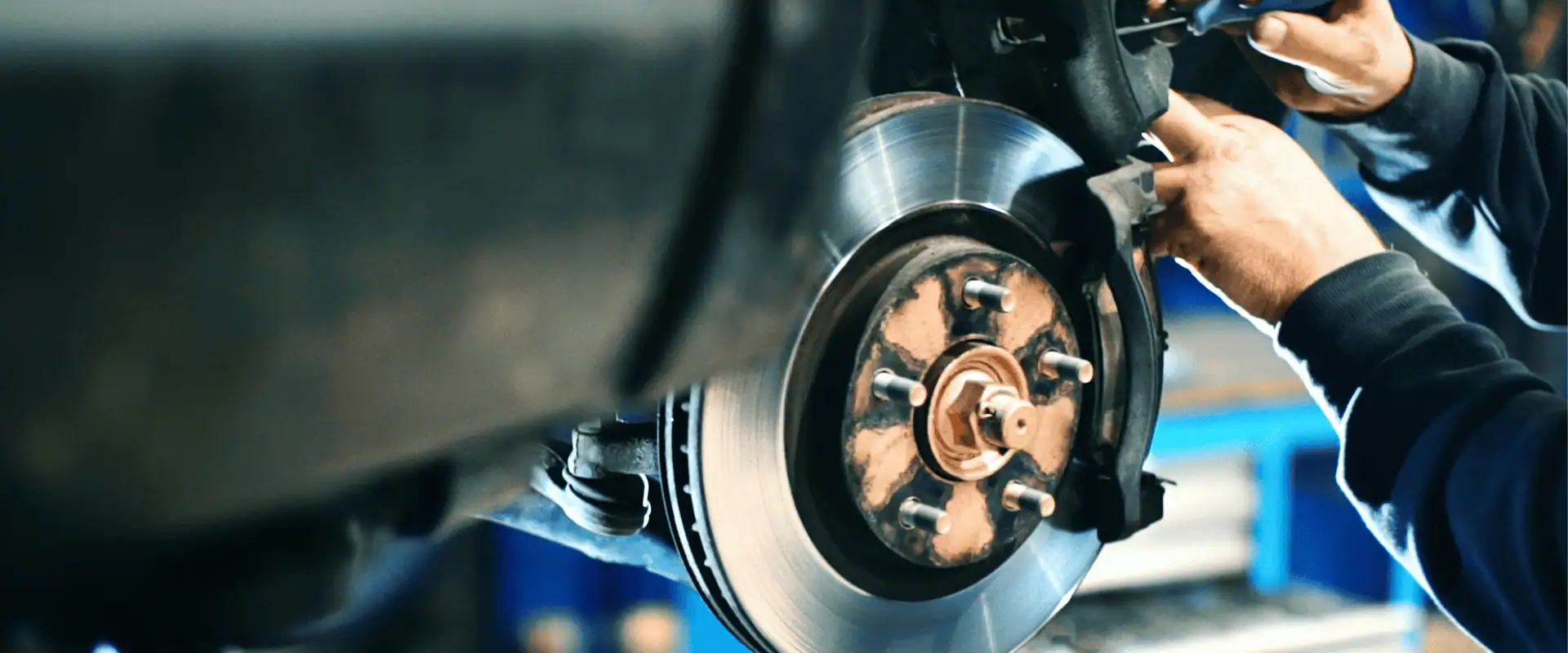
The location of the vibration is one of the fastest ways to narrow down why your car shakes when braking. If your steering wheel shakes when braking, the problem is almost always in the front rotors, pads, or front-end suspension components. If the shake feels like it is coming from the seat or the whole vehicle rather than the wheel, look toward the rear rotors, rear wheel bearings, or the vehicle’s frame and suspension. Either way, a proper inspection on a lift is the only way to confirm it with certainty, rather than guessing from the driver’s seat.
DIY Checks You Can Safely Do Before Bringing It In
Before you schedule a visit, a few quick observations can help our technicians diagnose faster. First, note whether your car shakes when braking at all speeds or only above about 45 mph. Next, notice whether the shake happens every time you brake or only occasionally. Finally, listen for any grinding, squealing, or humming that accompanies the vibration. None of this requires tools, and all of it helps narrow down the cause before your vehicle ever goes on the lift.
Is It Safe to Drive if Your Car Shakes When Braking?
A mild vibration that only appears under hard braking from highway speed is not an immediate emergency, but it is not something to put off, either. As rotors continue to wear unevenly, stopping distances can increase and the shake typically gets worse, not better, on its own. If the vibration is severe, is accompanied by a grinding or metal-on-metal noise, or the brake pedal feels soft or sinks toward the floor, treat that as an urgent safety issue and have your vehicle inspected right away rather than continuing to drive it around Irwindale, Arcadia, or Monrovia.
What Does It Cost to Fix a Car That Shakes When Braking?
Cost depends entirely on the cause, which is why an inspection comes before any estimate. As general, nationwide ballpark ranges: resurfacing or replacing a set of rotors typically runs in the low-to-mid hundreds of dollars per axle including pads, a caliper replacement often costs more due to the part itself, and a wheel bearing replacement varies significantly by vehicle. Because the same symptom can point to several different repairs, the most cost-effective first step is always a proper diagnosis rather than replacing parts by guesswork.
How Long Can You Keep Driving Like This?
There is no safe universal answer, since it depends on severity and cause. However, a car that shakes when braking almost never fixes itself, and rotor damage tends to accelerate once it starts, since the high spots wear the new pad material unevenly as well. As a result, most drivers find it is both safer and cheaper in the long run to get the issue diagnosed within a week or two of first noticing it, rather than waiting for it to become a grinding noise or a pulsing pedal that sinks toward the floor.

Frequently Asked Questions
Why does my car shake only when braking at highway speed?
High-speed braking generates more heat and puts more load on the rotors, which is exactly when a slightly warped rotor becomes noticeable. A rotor that shows no symptoms at 25 mph can shake noticeably at 65 mph.
Can low brake fluid cause my car to shake when braking?
Low or contaminated brake fluid is more likely to cause a soft or spongy pedal than a shake, but it is still worth having your fluid checked during a brake inspection, since air or moisture in the lines affects overall braking performance.
Is it always the rotors?
No. Rotors are the most common cause, but not the only one. That is why we recommend a full inspection instead of assuming and replacing the same part every time.
Will new brake pads fix a car that shakes when braking?
Sometimes, if unevenly worn pads are the actual cause. However, installing new pads onto already-warped rotors usually brings the shake right back within a few hundred miles, which is why both components are typically inspected together.
Does this happen more in stop-and-go traffic?
Yes. Frequent, heavy braking in stop-and-go conditions, like the daily commute through Irwindale and along the 605 corridor, generates more heat cycles on the rotors and tends to accelerate warping compared to steady highway driving.
Get It Checked at RPM Auto Center in Irwindale
If your car shakes when braking, our technicians can put it on a lift, measure rotor runout, inspect the pads, calipers, and related suspension components, and give you a clear, honest recommendation, not just a parts swap. We serve drivers throughout Irwindale, Monrovia, Arcadia, Baldwin Park, and Azusa. Learn more about our brake repair services, review more signs your brakes are in bad shape, read about the importance of timely brake repair, or schedule an appointment today. For general background on brake system maintenance, the nonprofit Car Care Council also publishes helpful consumer guidance.
Preventive Steps That Reduce the Chances Your Car Shakes When Braking
A few habits go a long way toward preventing the vibration in the first place. Avoid resting your foot on the brake pedal in traffic, since even light, constant pressure builds heat and accelerates rotor wear. Have your brake pads inspected at every oil change so a worn set gets caught before it damages the rotors underneath it. And if you tow, haul, or frequently drive in the hills above the San Gabriel Valley, consider upgrading to a higher-quality pad and rotor combination designed for extra heat, since that is exactly the driving pattern that makes a car shake when braking sooner than expected.
Related Symptoms Worth Mentioning to Your Technician
When you bring your vehicle in, it helps to mention anything else you have noticed alongside the shake. A pull to one side, a burning smell after highway driving, a spongy pedal, or a dashboard warning light can all point technicians toward the right corner of the car faster. Being specific about when your car shakes when braking, whether that is every stop, only from highway speed, or only after the car has been driven for a while, also speeds up an accurate diagnosis.
Why This Is So Common in the San Gabriel Valley
Local driving conditions matter more than most people realize. Frequent stop-and-go traffic on routes like the 605, 210, and Live Oak Avenue means SGV drivers brake far more often per mile than someone on a rural highway. Combine that with the summer heat common in Irwindale, Azusa, and Baldwin Park, and rotors simply see more thermal cycling here than in milder climates. That is a big part of why a car shakes when braking tends to show up sooner on vehicles driven primarily in this area.
Car Shakes When Braking: A Quick Symptom Checklist
Use this quick checklist before your visit. If your car shakes when braking every time you stop, note that first. If your car shakes when braking only above a certain speed, note the approximate speed. If your car shakes when braking on only one side, mention that too. Each detail helps our technicians confirm the cause faster once your vehicle is on the lift.
When a Car Shakes When Braking Gently
A shake that only appears under light, gentle braking, and disappears under firmer pressure, often points to a smaller amount of rotor warping or an early-stage pad issue. This is usually the easiest and least expensive version of the problem to correct, which is another reason to have it looked at as soon as your car shakes when braking, rather than waiting for it to worsen.
When a Car Shakes When Braking Hard
A shake that only shows up under hard, sudden braking, such as an emergency stop, suggests more significant rotor warping, a more advanced pad problem, or a suspension component that only reveals play under heavy load. If your car shakes when braking hard but feels smooth otherwise, do not assume it is a minor issue just because it is intermittent.

What Our Technicians Check First
When a customer tells us their car shakes when braking, our first step is always a visual and measured inspection rather than a guess. We check rotor thickness and runout with a dial indicator, inspect pad wear front and rear, check caliper slide pins for binding, and inspect the wheel bearings and suspension bushings on the affected corner. This process is what separates an accurate repair from a parts-cannon approach that replaces components one at a time hoping something fixes the shake.
Bottom Line
A car that shakes when braking is telling you something specific, and in nearly every case it is fixable without drama once the actual cause is identified. Do not wait for a mild pulsation to turn into a grinding noise or a soft pedal. If your car shakes when braking, the sooner it is inspected, the simpler and less expensive the fix is likely to be.
Choosing a Shop When Your Car Shakes When Braking
Not every shop diagnoses a car that shakes when braking the same way. Some will replace pads and rotors as a default without measuring anything, which sometimes fixes the symptom but often leaves the actual root cause, such as a stuck caliper or a worn bearing, untouched. Look for a shop that measures rotor runout and thickness with real tools, checks the full corner rather than just the obvious parts, and explains what it found in plain language before recommending a repair.
At RPM Auto Center, every customer who tells us their car shakes when braking gets that full corner inspection as standard practice, not an upsell. We would rather tell you honestly that your pads still have life left than replace parts that do not need it.
What to Expect During a Brake Inspection Visit
When you bring a vehicle in because it shakes when braking, the visit typically follows a predictable process. First, a technician takes a short test drive, when possible, to feel exactly how and when the shake occurs. Next, the vehicle goes on a lift so each wheel can be removed and inspected individually rather than assessed from the outside. Rotor thickness and runout are measured with precision tools rather than estimated by eye, pad material is checked for even wear across the full surface, and caliper slide pins are tested for smooth movement. Wheel bearings are checked for play by hand, and suspension components most likely to contribute to a shake, such as control arm bushings and tie rod ends, are inspected as part of the same visit.
Only after that full picture is complete do we put together a recommendation. In many cases, the fix is limited to the front axle. In others, especially on higher-mileage vehicles, both rotors and pads need attention at the same time to fully resolve why the car shakes when braking. Either way, you will see and understand what was found before any work begins, with photos and clear explanations rather than technical jargon.
How Long Does the Repair Take?
Most rotor and pad replacements are same-day work, often completed in a couple of hours once parts are on hand for your specific vehicle. If a wheel bearing or a more involved suspension component turns out to be the cause of your car shaking when braking, the appointment may take longer, and we will let you know that up front rather than after the fact.
Do I Need an Appointment?
Because a proper diagnosis for a car that shakes when braking requires lift time and careful measurement, we recommend scheduling ahead rather than walking in, so a bay and technician are available specifically for your inspection.

One Comment