
Summer Tire Safety: Pressure, Tread & Avoiding Blowouts in the Heat
Summer tire safety is one of the most important things to check before driving in Irwindale, Arcadia, Monrovia, Duarte, Baldwin Park, Azusa, El Monte, City of Hope, Bradbury, or anywhere across the San Gabriel Valley. Hot pavement, long freeway drives, low tire pressure, worn tread, and uneven wear can all increase the risk of tire problems when temperatures rise.
Most drivers think about oil changes, AC performance, or battery issues before summer driving, but tires deserve just as much attention. Your tires are the only part of your vehicle touching the road, and when they are underinflated, worn, damaged, or out of alignment, your vehicle may be less stable, less efficient, and more vulnerable to a blowout.
At RPM Auto Center in Irwindale, we help drivers stay safe with tire service, wheel alignment, suspension checks, steering inspections, brake service, and full auto repair before the heat turns a small tire issue into a serious problem.
Summer Tire Safety: Why Heat Makes Tire Problems Worse
Hot weather increases tire stress. When tires roll across hot pavement at freeway speeds, they generate heat through friction. If a tire is underinflated, overloaded, damaged, or worn, it can flex more than it should. That extra flexing creates additional heat, which can increase the risk of tire failure.
The National Highway Traffic Safety Administration recommends checking tires for damage, inspecting tread and sidewalls, addressing uneven wear, monitoring tread depth, and confirming your spare tire and jack kit before summer road trips. NHTSA also notes that sustained high temperatures, including long-distance driving in hot weather, can contribute to tire deterioration, blowouts, and tread separation.
That is why summer tire safety is not just about checking whether your tires “look okay.” It is about making sure tire pressure, tread depth, tire condition, alignment, and load capacity are all working together before the heat exposes a weak spot.
1. Check Tire Pressure When the Tires Are Cold
Tire pressure should be checked when the tires are cold, which means the vehicle has been parked long enough for the tires to cool down before driving. AAA recommends checking tire pressure when the car has been idle and the tires are cool, then inflating to the vehicle manufacturer’s recommended pressure.
Use the recommended PSI listed on the driver-side door placard or in your owner’s manual. Do not inflate your tires to the number printed on the tire sidewall. That number represents the maximum pressure the tire can hold, not the recommended pressure for your specific vehicle.
Low tire pressure can cause poor handling, uneven wear, reduced fuel economy, longer stopping distance, and increased heat buildup. If you are not sure whether your tires are properly inflated, RPM Auto Center can inspect them during tire service in Irwindale or as part of a pre-trip safety check.
2. Do Not Ignore the TPMS Light
Your tire pressure monitoring system, or TPMS, is designed to alert you when one or more tires are significantly underinflated. If the TPMS light comes on, do not assume it is just a sensor issue.
A low tire may have a puncture, slow leak, valve stem problem, bead leak, or natural air loss. Tires can lose pressure over time even without visible damage, and hot weather driving can make an already low tire more vulnerable.
If your TPMS light is on, check tire pressure as soon as possible. If the light keeps returning, schedule a tire inspection at RPM Auto Center before the issue turns into a roadside problem.
3. Inspect Tread Depth Before Summer Driving
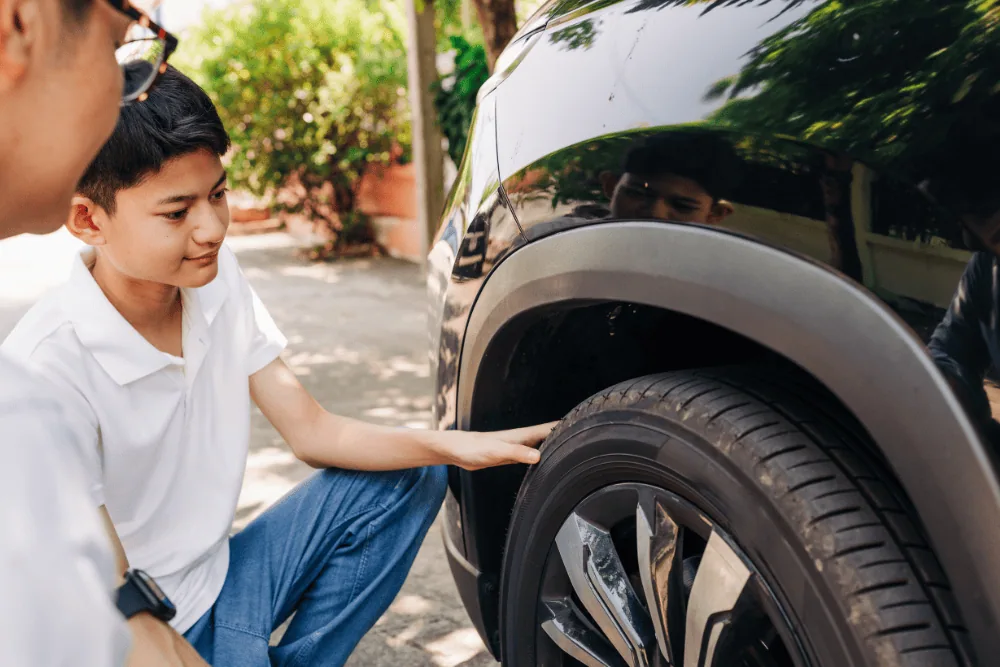
Tread depth affects traction, braking, water evacuation, and overall tire safety. Worn tires are especially risky during summer road trips because long drives, higher speeds, hot pavement, and sudden weather changes can all demand more from the tire.
NHTSA recommends making sure tire tread is at least 2/32 of an inch and using the penny test to determine when it may be time to replace a tire. AAA’s tire safety guidance also emphasizes that tires need correct air pressure, tread depth, balance, and proper wheel alignment for safe performance.
A quick tread check can help, but you should not wait until tires are completely worn out to take action. If you notice reduced traction, longer stopping distance, visible wear bars, cracking, or uneven tread wear, have the tires inspected.
4. Watch for Uneven Tire Wear
Uneven tire wear is often a sign of an underlying problem. The cause may be poor alignment, incorrect tire pressure, worn suspension parts, lack of rotation, wheel imbalance, or steering issues.
Common wear patterns include inside-edge wear, outside-edge wear, cupping, feathering, center wear, or one tire wearing faster than the others. If your tires are wearing unevenly, simply replacing them may not solve the problem. The new tires may wear out early if the root cause is not corrected.
RPM Auto Center provides wheel alignment in Irwindale to help correct pulling, crooked steering wheels, and uneven tire wear. Proper alignment helps your vehicle track straight, improves handling, and can help extend tire life.
5. Look for Cracks, Bulges, Cuts, and Sidewall Damage
Tread depth is not the only thing that matters. Before summer driving, inspect the entire tire, including the sidewalls.
Warning signs include cracks, cuts, punctures, bulges, bubbles, scrapes, exposed cords, or objects stuck in the tire. A bulge or bubble can indicate internal tire damage and should be taken seriously. The tire may be at higher risk of failure, especially at freeway speeds or in high heat.
If you see visible damage, avoid pushing the tire through another long drive. Have it inspected by a professional before the tire fails unexpectedly.
6. Check the Spare Tire or Tire Repair Kit
A flat tire is frustrating, but not having a usable spare tire or repair option can turn a small issue into a major delay.
Before a summer road trip, check whether your vehicle has a spare tire, compact spare, inflator kit, sealant kit, run-flat tires, or no spare at all. Many newer vehicles do not include a traditional spare tire, so it is important to know what you have before you need it.
If your vehicle has a spare, make sure it is properly inflated and that the jack and tools are present. If your vehicle uses a repair kit, make sure the sealant has not expired and the inflator works.
7. Avoid Overloading Your Vehicle
Summer trips often mean luggage, coolers, beach gear, camping equipment, passengers, and pets. Extra weight creates more heat and stress for the tires, especially during long freeway drives.
Check your vehicle’s tire and loading information label to understand the recommended tire pressure and load limits. Overloading the vehicle can increase stopping distance, affect handling, and make tire failure more likely.
If you are preparing for a heavy road trip load, a tire, brake, and suspension check can help confirm the vehicle is ready. RPM Auto Center can inspect supporting systems through brake repair and inspections, suspension repair, and steering repair when tire wear or handling symptoms point to a larger issue.
8. Pay Attention to Vibration, Pulling, or Steering Changes
A tire problem may show up while driving before you ever see visible damage. Watch for vibration at highway speed, pulling left or right, a crooked steering wheel, tire noise, wandering, or a rough ride.
These symptoms may point to tire imbalance, alignment issues, tire damage, suspension wear, or steering concerns. Driving through these symptoms during summer heat can accelerate tire wear and increase risk.
RPM Auto Center can inspect tire wear patterns, suspension condition, steering components, and alignment angles to help identify the cause. If warning lights, TPMS issues, or unusual drivability symptoms are involved, our auto diagnostics service can help pinpoint what is happening before unnecessary parts are replaced.
9. Rotate Tires on Schedule
Tire rotation helps promote even wear and can extend tire life. Front and rear tires often wear differently because of steering, braking, drivetrain layout, vehicle weight distribution, and driving habits.
If your tires have not been rotated recently, schedule tire service before a long trip. Regular rotation also gives the technician a chance to spot early signs of abnormal wear, damage, or alignment problems.
Pairing tire rotation with routine maintenance, including oil changes, is a simple way to keep safety checks consistent and catch problems before they become expensive repairs.
10. Replace Unsafe Tires Before They Fail
If a tire is bald, damaged, cracked, bulging, severely uneven, or repeatedly losing air, replacement may be the safest option. Trying to squeeze one more trip out of unsafe tires can be expensive and dangerous.
A blowout can damage wheels, fenders, suspension components, brake lines, and other parts of the vehicle. More importantly, it can create a serious safety risk for you, your passengers, and other drivers.
If you are not sure whether your tires are safe, have them inspected before you drive long distance in the heat.
What to Do If You Have a Tire Blowout
If a blowout happens, stay calm and avoid slamming on the brakes. Grip the steering wheel firmly, keep the vehicle as straight as possible, ease off the accelerator, and let the vehicle slow down gradually. Once you have control, move to a safe location away from traffic.
After a blowout, do not continue driving on the damaged tire. Driving on a flat can damage the wheel and create additional safety concerns.
Get Summer Tire Service in Irwindale, CA
RPM Auto Center helps drivers stay safe with tire service, wheel alignment, suspension checks, steering repair, brake inspections, diagnostics, oil changes, and full auto repair services.
Our shop is located at 110 E Longden Ave #B, Irwindale, CA 91706, and we regularly serve drivers from Irwindale, Arcadia, Monrovia, Duarte, Baldwin Park, Azusa, El Monte, City of Hope, Bradbury, and nearby San Gabriel Valley communities.
If you are searching for auto repair near Arcadia, CA, RPM Auto Center is a nearby Irwindale shop that can help with tire inspections, alignment, diagnostics, and maintenance before your next summer drive.
If your tires are worn, your TPMS light is on, your vehicle pulls to one side, or you are preparing for a summer road trip, schedule service with RPM Auto Center before the heat turns a small tire issue into a bigger problem.
Call RPM Auto Center or schedule service online today for tire service, alignment, and summer vehicle safety checks in Irwindale.
Frequently Asked Questions
How often should I check my tire pressure in the summer?
Check tire pressure at least once a month and before long road trips. Always check pressure when the tires are cold for the most accurate reading.
Does hot weather increase tire pressure?
Yes. Tire pressure can rise as tire temperature increases during driving or hot weather. That is why the most accurate pressure check is done when the tires are cold, using the PSI listed on the vehicle’s door placard or owner’s manual.
Can low tire pressure cause a blowout?
Yes. Underinflated tires can flex more than they should, creating heat buildup and increasing the risk of tire failure. Low tire pressure is one of the most important tire safety issues to correct before summer driving.
How do I know if my tire tread is too low?
Use the penny test or have the tread measured professionally. If you can see the top of Lincoln’s head when a penny is placed upside down in the tread, the tire is worn and should be replaced.
What causes uneven tire wear?
Uneven tire wear may be caused by poor alignment, incorrect tire pressure, worn suspension parts, wheel imbalance, lack of rotation, or steering issues. A professional inspection can identify the cause.
Where can I get tire service near Irwindale, CA?
RPM Auto Center provides tire service, wheel alignment, tire inspections, and auto repair in Irwindale, CA. We serve drivers from Arcadia, Monrovia, Duarte, Baldwin Park, Azusa, El Monte, City of Hope, Bradbury, and surrounding San Gabriel Valley communities.
