
When your vehicle’s air conditioning starts acting up, it rarely gets better on its own. What starts as air that feels a little less cold can quickly turn into warm air, weak airflow, strange smells, or a complete system failure. If you have been searching for car A/C repair near me, there is a good chance your vehicle is already showing signs that it needs professional attention.
At RPM Auto Center, we help drivers diagnose and repair automotive A/C issues before they turn into larger and more expensive problems. Whether your A/C is blowing warm air, taking too long to cool down, or making unusual noises, addressing the issue early can help restore comfort and prevent further damage to your system.
If your vehicle is already showing symptoms, scheduling an inspection through our A/C and heat repair service page or our auto diagnostics service is the best next step.
1. Your Car A/C Is Not Blowing Cold Air
This is the most obvious sign that something is wrong. If the air coming from your vents is cool at best, or completely warm, your system likely needs inspection.
There are several possible causes behind an A/C system that is not blowing cold air, including:
-
Low refrigerant
-
A refrigerant leak
-
A failing compressor
-
A faulty condenser
-
Electrical issues
-
Problems with the expansion valve or pressure switches
Many drivers assume they simply need a recharge, but that is not always the case. Kelley Blue Book explains that warm air can be caused by refrigerant problems, compressor failure, leaks, and other A/C component issues. If refrigerant is low, there is often an underlying leak or mechanical issue that needs to be corrected first.
2. The Airflow From Your Vents Feels Weak
Sometimes the issue is not temperature, but airflow. If your A/C is blowing cold air but the volume of air feels weak, restricted, or inconsistent, there may be a problem elsewhere in the system.
Weak airflow can be caused by:
-
A clogged cabin air filter
-
A failing blower motor
-
Ventilation door or actuator problems
-
Mold or debris buildup in the HVAC system
-
Electrical faults affecting fan speed
AAA also notes that weak airflow may be tied to blower motor issues, clogged tubing, or filter-related restrictions. (AAA)
If your vehicle is due for routine maintenance too, this can be a smart time to pair A/C service with an oil change or broader inspection.
3. Your A/C Only Works Sometimes
Intermittent A/C performance is another common warning sign. Maybe the system blows cold when you first start driving, then turns warm later. Maybe it works well on some days and poorly on others. Or perhaps it cools better at highway speeds but struggles in traffic.
This type of inconsistent performance can point to:
-
Compressor clutch issues
-
Low refrigerant pressure
-
Electrical connection problems
-
Cooling fan failures
-
Sensor or control module malfunctions
Intermittent A/C problems are often overlooked because the system still “sort of works.” In reality, that inconsistency usually means a component is beginning to fail. Catching it early with a proper inspection at RPM’s diagnostics page can help prevent a larger repair later.
4. You Hear Strange Noises When the A/C Is On
Your vehicle’s air conditioning system should operate quietly. If you hear rattling, buzzing, squealing, grinding, or clicking when you turn the A/C on, something is wrong.
Noises may indicate:
-
A worn compressor
-
A loose belt
-
Debris in the blower motor
-
Failing pulleys or bearings
-
Internal compressor damage
Strange sounds should never be ignored. In many cases, they mean a part is under stress or beginning to fail. What starts as a small noise can turn into a much larger repair if the damaged component affects the rest of the system.
5. There Is a Bad Smell Coming From the Vents
If your air conditioning smells musty, dirty, or sour when it runs, your system may have moisture buildup, bacteria, or mold growth inside the evaporator or ventilation system.
Common odors include:
-
Musty smells from mold or mildew
-
Burning smells from electrical issues
-
Chemical odors from refrigerant leaks
-
Dirty or stale smells from a clogged cabin air filter
These odors are not just unpleasant. They can indicate trapped moisture, restricted airflow, or component issues that deserve attention. Technical service guidance has long linked musty vent odors to evaporator-area moisture and microbial buildup. (NHTSA service bulletin archive)
6. You Notice Water or Fluid Leaks
A small amount of water under your vehicle can be normal when the A/C is running, since condensation drains from the system. But if you notice excessive moisture inside the cabin, pooling under the dash, oily residue, or repeated signs of leaking near A/C components, that can indicate a problem.
Potential causes include:
-
A clogged evaporator drain line
-
Refrigerant leaks
-
Damaged hoses or seals
-
Condensation drainage issues
-
Component cracks or failures
The EPA also notes that vehicle A/C refrigerant should be handled properly and leak-related issues should be professionally addressed. (EPA motor vehicle A/C guidance)
7. Your Defroster Is Not Working Properly
Many drivers do not realize that the A/C system plays a major role in defrosting and defogging your windows. If your windshield is taking too long to clear or your windows remain foggy, your vehicle’s air conditioning system may not be functioning correctly.
That is because the A/C system helps remove humidity from the air inside the cabin. When it is not working properly, moisture stays trapped, making visibility worse.
If your defroster performance has declined, especially when using front defrost mode, it is worth having the A/C system inspected. This is not just a comfort issue. It is also a safety issue.
Why You Should Not Wait to Schedule Car A/C Repair
A small A/C issue can turn into a more expensive repair if it is ignored. For example, low refrigerant can put additional strain on the compressor. A clogged filter can reduce airflow and overall efficiency. A small leak can eventually become a larger system failure.
By scheduling service early, you can potentially avoid:
-
Major compressor damage
-
Higher repair costs
-
Reduced system efficiency
-
Cabin discomfort during hot weather
-
Loss of visibility due to poor defrost performance
When drivers search for car A/C repair near me, it is often because the system has already become unreliable. The sooner the issue is diagnosed, the better the chances of resolving it before it spreads to other components.
What RPM Auto Center Checks During A/C Service
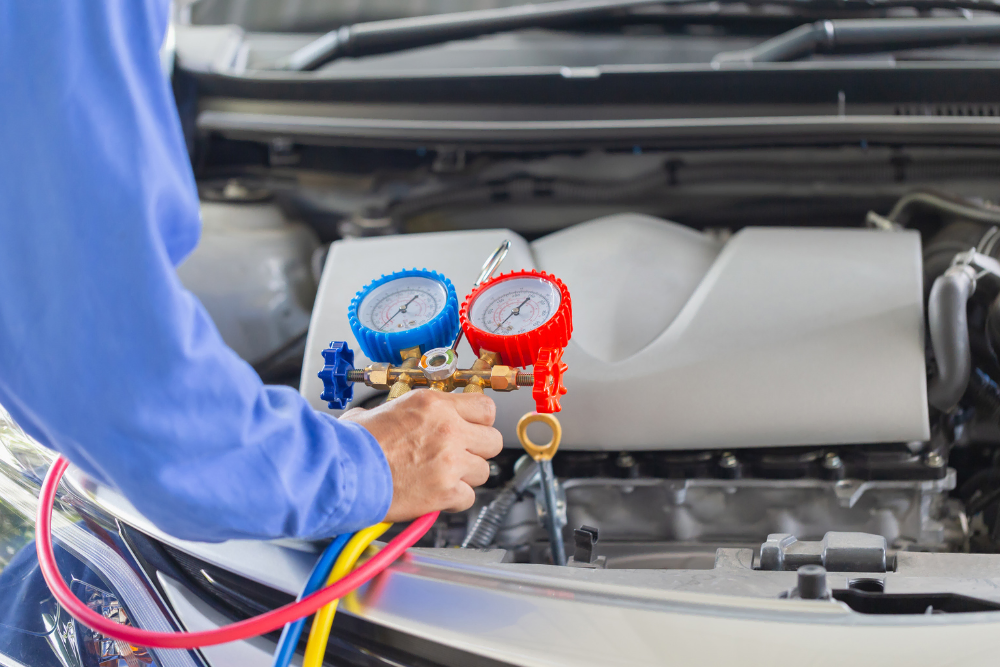
At RPM Auto Center, our goal is to identify the root cause of the problem, not just the symptom. Depending on the issue, our inspection may include:
-
Checking vent temperature and airflow
-
Inspecting refrigerant levels and pressures
-
Looking for leaks in hoses, seals, and major components
-
Testing compressor operation
-
Checking condenser and cooling fan performance
-
Inspecting the cabin air filter
-
Evaluating electrical controls and HVAC operation
If you want to learn more about A/C care and repair, you can also read our related article: Keeping Your Cool: A Comprehensive Guide to Auto AC Repair.
Schedule Car A/C Repair at RPM Auto Center
If you have been searching for car A/C repair near me, RPM Auto Center is here to help. Our team can inspect your system, pinpoint the issue, and recommend the right repair to get your vehicle cooling properly again.
Do not wait until your A/C completely stops working. If your vehicle is already showing signs of trouble, now is the time to schedule service and restore comfort before the problem gets worse.
To get started, visit our A/C and heat repair page, check our current specials, read our reviews, or contact us to book your visit.
